

Why Finding the Best Way to Buy Bitcoin Matters for Your First Purchase

Best way buy Bitcoin depends on what matters most to you: low fees, ease of use, or maximum security. Here’s what works for most beginners:
Top 3 Methods for First-Time Buyers:
- Online Crypto Platforms (Recommended) – Lowest fees (0-5%), easy to use, widely trusted
- Mobile Payment Apps – Most convenient, higher fees (1.8-2.2%), good for small amounts
- Bitcoin ATMs – Cash purchases, highest fees (5-10%), instant but expensive
| Method | Best For | Typical Fees | Security Level |
|---|---|---|---|
| Online Platforms | First-time buyers | 0-5% | High |
| Mobile Apps | Quick small purchases | 1.8-2.2% | Medium |
| Bitcoin ATMs | Cash-only buyers | 5-10% | Medium |
Bitcoin has come a long way since 2009. What once required technical knowledge and complicated mining software is now as simple as opening a bank account online. You don’t need to understand blockchain technology to buy Bitcoin safely.
The challenge for beginners isn’t whether you can buy Bitcoin—it’s knowing how to do it without overpaying on fees, falling for scams, or making costly mistakes with storage.
This guide cuts through the confusion. You’ll learn exactly which method fits your situation, what documentation you need, how to avoid common pitfalls, and most importantly, how to keep your Bitcoin secure after you buy it.
Whether you’re starting with $10 or $1,000, the right approach makes all the difference.
I’m Randy Speckman, and I’ve helped hundreds of cautious beginners steer their first Bitcoin purchase safely. Through years of teaching new crypto buyers, I’ve identified the best way buy Bitcoin for people who value security and simplicity over hype and complexity.
For a complete introduction to Bitcoin basics and why it matters, see our Bitcoin Beginner Guide.
What is the Best Way to Buy Bitcoin? A Comparison of Methods
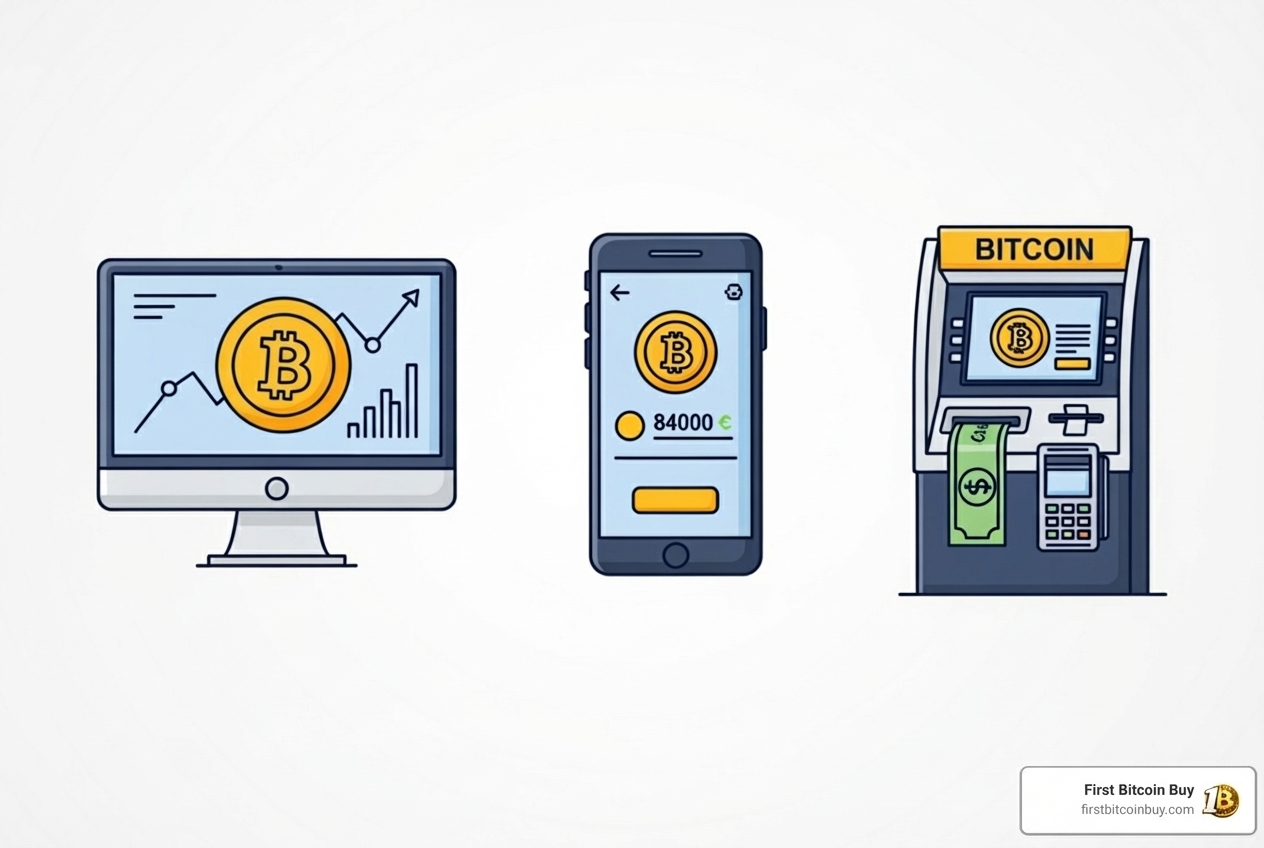
When you’re ready to acquire Bitcoin, you’ll find several methods, each with its own pros and cons. The goal is to find the best way buy Bitcoin for your budget, comfort level, and speed. Most methods involve exchanging fiat currency (like the US Dollar) for Bitcoin.
Let’s break down the main options:
| Method | Ease of Use | Typical Fees | Ownership (Direct/Indirect) | Best For |
|---|---|---|---|---|
| Online Crypto Platforms | Easy | 0% – 5% | Direct | Beginners, regular purchases, lower fees |
| Mobile Payment Apps | Very Easy | 1.8% – 2.2% (for small purchases) | Direct (often with platform custody) | Convenience, small, quick buys |
| Peer-to-Peer (P2P) Markets | Moderate | Varies (often low) | Direct | Privacy, diverse payment options |
| Bitcoin ATMs | Easy | 5% – 10% | Direct | Cash buyers, speed, privacy (but expensive) |
| Traditional Stockbrokers | Easy | Around 1% | Indirect (via ETFs or custodial) | Traditional investors, portfolio integration |
| Bitcoin Exchange-Traded Funds (ETFs) | Easy | 0.15% – 1.5% (expense ratio) | Indirect | Investors seeking exposure without direct ownership |
For a step-by-step walkthrough of the most beginner-friendly methods, check out how to Start Buying Bitcoin.
Online Crypto Platforms: The Most Popular and Best Way to Buy Bitcoin for Beginners
For most newcomers, online cryptocurrency exchanges are the best way buy Bitcoin. These platforms act like online brokerages for digital assets, allowing you to buy, sell, and trade crypto using traditional money.
Pros of Online Crypto Platforms:
- User-Friendly: Designed for beginners with intuitive apps and websites.
- High Liquidity: A ready market of buyers and sellers ensures you can trade quickly at fair prices.
- Lower Fees: Fees typically range from 0% to 5%, which is often lower than other methods. Some platforms offer even lower fees for certain trade types.
- Wide Range of Payment Methods: In the USA, you can usually fund your account with a bank account (ACH), debit card, or wire transfer. Some platforms also support PayPal.
- Security Features: Reputable exchanges use two-factor authentication (2FA), encryption, and sometimes insurance funds for user assets.
Cons of Online Crypto Platforms:
- KYC Requirements: You must provide personal identification to comply with regulations, which means less privacy.
- Custodial Risk: The exchange often holds your Bitcoin by default, meaning they control the private keys. This is why it’s crucial to learn about moving your coins to a personal wallet.
Alternative Ways to Gain Bitcoin Exposure
While online platforms are our top recommendation, other avenues exist for different priorities.
Mobile Payment Apps
Popular payment apps offer a convenient way to buy Bitcoin. However, this convenience often comes with higher fees (around 1.8% to 2.20% for small purchases) and less control, as the app may not allow you to move your Bitcoin to a personal wallet.
Peer-to-Peer (P2P) Marketplaces
P2P platforms connect buyers and sellers directly, offering more payment options and potential privacy. However, they are more complex for beginners and carry a higher risk of scams, even with escrow services in place.
Traditional Stockbrokers
Some traditional and FinTech brokerages now offer Bitcoin trading. This provides a familiar environment for investors to manage crypto alongside stocks. The main drawbacks are that you typically can’t withdraw your Bitcoin to a personal wallet and crypto options are limited.
Bitcoin Exchange-Traded Funds (ETFs)
Approved in early 2024, Bitcoin ETFs allow you to invest in Bitcoin’s price without owning the asset directly. You buy shares through a regular brokerage account. This is simple and regulated but means you don’t own actual Bitcoin and can’t use it for payments. ETFs also have ongoing annual fees (expense ratios).
What is the Best Way to Buy Bitcoin with Cash?
If you prefer using physical cash, Bitcoin ATMs are a primary option.
Bitcoin ATMs
These machines let you buy Bitcoin by inserting cash. With over 30,000 ATMs in the USA, they are accessible and fast. However, this convenience comes at a high cost, with fees often ranging from 5-10% or more. The Federal Trade Commission also warns that scammers frequently use Bitcoin ATMs to demand payments, so be cautious if anyone instructs you to use one.
Gift Cards
Some platforms, like Coinbase, allow you to redeem digital gift cards for Bitcoin in most of the U.S. This can be a useful way to convert unused gift card balances into crypto, though transaction fees may still apply.
You can learn more about using gift cards for purchases in our Bitcoin Beginner Guide.
Getting Started: What You’ll Need to Buy Bitcoin
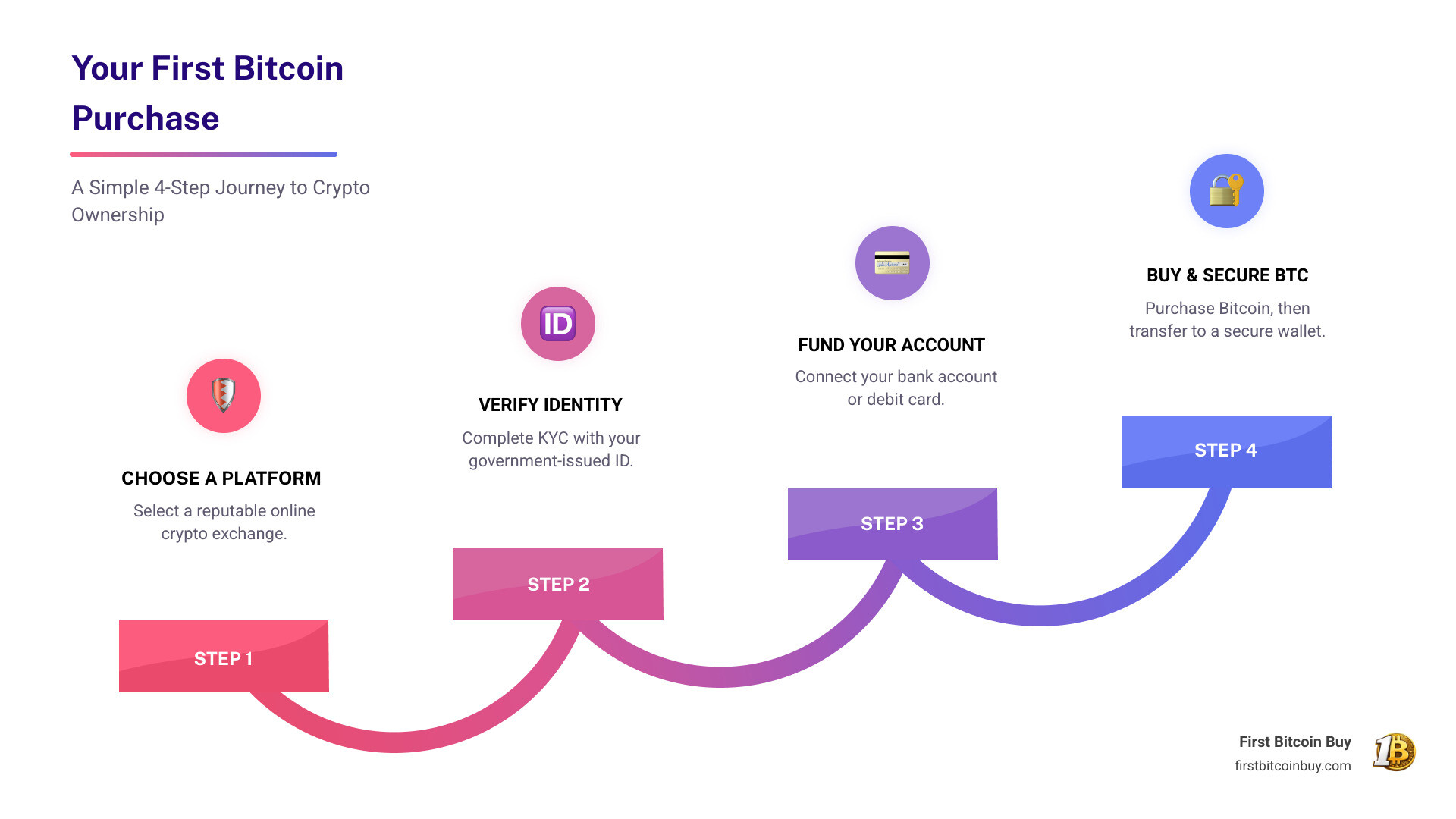
So you’ve decided on the best way buy Bitcoin for you. Fantastic! Before you make your first purchase, you’ll need to gather a few things, especially when using a regulated online platform in the USA.
Here’s what you’ll typically need:
- Government-Issued Identification: For the “Know Your Customer” (KYC) process, you’ll need a clear photo of your driver’s license, passport, or state ID card.
- Proof of Address: A recent utility bill or bank statement (usually within the last three months) to verify your address.
- Social Security Number (SSN): Required for US residents for tax reporting purposes.
- A Valid Payment Method: This could be a linked bank account, a debit card, or wire transfer details.
- A Secure Internet Connection: Always use a private, secure connection (not public Wi-Fi) for financial transactions.
- Two-Factor Authentication (2FA): Enable 2FA on your account immediately. This adds a critical layer of security by requiring a code from your phone to log in.
Having these items ready will make the signup process much smoother. It’s a necessary step to ensure the security and legality of your investment.
To make sure you’re fully prepared, we’ve put together a handy guide. You can download our free Bitcoin Beginner Checklist to ensure you don’t miss anything.
Can I Buy a Small Amount of Bitcoin?
Absolutely. You don’t need to buy a whole Bitcoin, which can seem daunting at its current price of $58,238.64. Bitcoin is divisible into tiny units called Satoshis, meaning you can own as little as 0.00000001 BTC.
This is great for beginners for a few reasons:
- Accessibility: You can start with $10 or less on many platforms.
- Dollar-Cost Averaging: This strategy involves investing a fixed amount regularly (e.g., $25 a week). It helps reduce the impact of price volatility and is a smart way to build a position over time without trying to time the market.
- Learning the Ropes: Buying a small amount lets you get comfortable with the process—from purchase to storage—without a large financial commitment.
Start with an amount that fits your personal financial situation and risk tolerance.
To help you decide how much to start with, learn more about how much Bitcoin to buy.
“Not Your Keys, Not Your Coins”: How to Securely Store Your Bitcoin
You’ve found the best way buy Bitcoin and made your purchase. Congratulations! The next critical step is securing it. This is where the crypto mantra, “Not your keys, not your coins,” becomes vital.
When you buy Bitcoin on an exchange, it holds the “private keys” for you. These keys are the secret codes that prove ownership and allow you to spend your Bitcoin. If an exchange holds your keys, they ultimately control your Bitcoin. As Bitcoin.org warns, many online platforms have been hacked in the past, leading to stolen funds.
Taking “self-custody” by moving your Bitcoin to a personal wallet means you control your private keys. This gives you full sovereignty over your funds.
- Private Keys: A secret code that lets you access your Bitcoin. Never share it.
- Public Address: Like a bank account number, you share this to receive Bitcoin.
For any significant amount, moving your Bitcoin to a personal wallet is highly recommended.
Learn more about security features and best practices for your Bitcoin in our dedicated guide on security.
Hot Wallets vs. Cold Wallets
Personal wallets fall into two categories: hot and cold.
Hot Wallets
A hot wallet is any crypto wallet connected to the internet, such as an exchange wallet or a mobile/desktop app (e.g., Coinbase Wallet).
Pros:
- Convenience: Easy to access for frequent transactions.
- Accessibility: Available anywhere with an internet connection.
Cons:
- Security Risk: Being online makes them more vulnerable to hacking and malware.
- Custodial Risk (for exchange wallets): You don’t control the private keys.
Hot wallets are best for small amounts of crypto that you plan to actively use.
Cold Wallets
A cold wallet is a wallet that is not connected to the internet, making it far more secure.
Types of Cold Wallets:
- Hardware Wallets: Physical devices (like a USB drive) that store your private keys offline. They are the gold standard for security.
- Paper Wallets: A physical printout of your keys. They are secure offline but can be easily lost or damaged.
Pros:
- Maximum Security: Virtually immune to online hacking.
- Self-Custody: You have full control over your keys and your Bitcoin.
- Ideal for Long-Term Holding: Perfect for securing investments for the long term.
Cons:
- Less Convenient: Requires physical access to the device for transactions.
- Responsibility: You are solely responsible for its safety. If you lose the device and your recovery phrase, your funds are gone forever.
We strongly recommend a hardware wallet once your Bitcoin holdings become substantial. It’s a small investment for significant peace of mind.
Understanding the Risks and Rules of Bitcoin Investing
Investing in Bitcoin is exciting, but it’s crucial to understand the risks and regulations. While we help you find the best way buy Bitcoin, we also want you to be an informed investor.
Bitcoin Volatility
Bitcoin is known for dramatic price swings. Its price can change significantly in a short period. For instance, its current price of $58,238.64 is a 21.06% decrease from its all-time high of $73,780.07. This volatility means your investment value can rise or fall quickly.
Key Risks:
- Market Risk: The value of Bitcoin can go down as well as up. Only invest what you can afford to lose.
- Lack of SIPC Insurance: Unlike traditional brokerage accounts, cryptocurrency investments are not insured by the Securities Investor Protection Corporation (SIPC).
- Regulatory Changes: The legal landscape for crypto is still evolving, and new rules could impact Bitcoin’s value.
- Common Mistakes: New investors often fall for scams or neglect security. We cover these in our Common Mistakes guide.
USA Regulations and Tax Implications
In the USA, Bitcoin is legal, but state laws can vary. Federally, the Financial Crimes Enforcement Network (FinCEN) requires exchanges to follow anti-money laundering (AML) and Know Your Customer (KYC) policies.
Tax Implications:
The IRS treats Bitcoin as property. This means any time you sell, exchange, or spend Bitcoin, it is generally a taxable event. You may owe capital gains tax if you sell it for a profit. It is crucial to keep detailed records of all your transactions for tax reporting.
We believe understanding these aspects is part of finding the best way buy Bitcoin responsibly.
To gain a deeper understanding of these risks and how to mitigate them, visit our guide: Is Bitcoin Safe? Understand the risks.
Frequently Asked Questions about Buying Bitcoin
Let’s tackle some of the most common questions from first-time Bitcoin buyers.
What are the typical fees for buying Bitcoin?
Fees vary significantly by method and platform. Here’s a general breakdown:
- Online Crypto Platforms: Typically the most competitive, with fees from 0% to 5%. The exact fee depends on your payment method (bank transfers are often cheaper than debit cards) and transaction size. Always check the fee in the trade preview.
- Bitcoin ATMs: The most expensive option, with fees from 5% to 10% or even higher. You pay a premium for the convenience of using cash.
- Mobile Payment Apps: Fees can be around 1.8% to 2.20% for smaller purchases.
- Bitcoin ETFs: These have an annual expense ratio (a management fee) ranging from 0.15% to 1.5%.
Always compare fees to find the best way buy Bitcoin for your budget.
For a comprehensive breakdown of how fees work, check out our Fees Explained guide.
What information is required to buy Bitcoin in the USA?
To comply with Know Your Customer (KYC) and Anti-Money Laundering (AML) regulations, reputable US platforms require you to verify your identity. You will typically need:
- A government-issued ID (driver’s license, passport).
- Your Social Security number (SSN).
- Proof of address (like a recent utility bill).
This is a standard security procedure for regulated financial services.
Can I buy Bitcoin with a credit card?
Generally, no, most reputable platforms in the USA do not allow direct Bitcoin purchases with a credit card. This is to prevent fraud (credit card transactions can be reversed, while Bitcoin transactions cannot) and to discourage users from taking on high-interest debt for a volatile asset. Sticking to a debit card or bank transfer is the safer, recommended approach for your first purchase.
Conclusion: Your Crypto Journey Begins Now
You’ve taken the crucial first step in understanding Bitcoin. We’ve explored the various methods, from user-friendly online platforms and convenient mobile apps to cash-friendly ATMs and traditional investment vehicles like ETFs. We’ve also highlighted the importance of security, understanding fees, and being aware of the risks and regulations, especially here in the USA.
The best way buy Bitcoin isn’t a one-size-fits-all answer; it’s the method that best aligns with your personal needs for ease of use, cost, and security. For beginners, we consistently find that reputable online crypto platforms offer the ideal balance of accessibility, lower fees, and robust security features.
Our mission at First Bitcoin Buy is to guide first-time buyers through this process, focusing on safety and simplicity. We encourage you to start small, get comfortable with the process, and always prioritize the security of your digital assets. This isn’t just about making a purchase; it’s about confidently stepping into the future of finance.
For a complete, guided walkthrough on the safest and easiest platform for new users, download our free Coinbase Beginner Guide. Your crypto journey truly begins now!