
Why Safely Buying Crypto Starts With the Right Knowledge
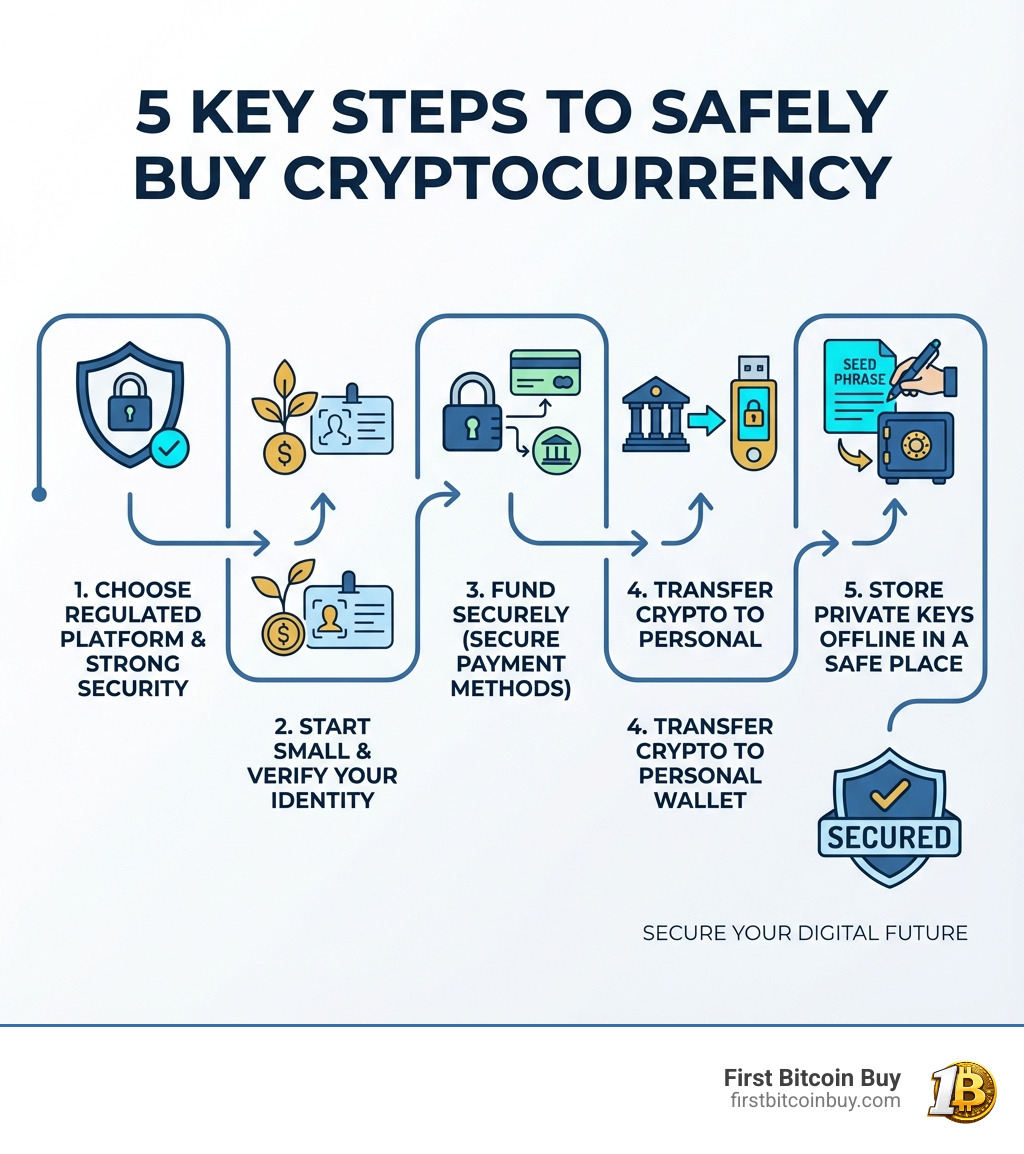
To safely buy crypto, follow these essential steps:
- Choose a regulated platform with strong security like two-factor authentication (2FA) and cold storage.
- Start small and never invest more than you can afford to lose.
- Verify your identity through KYC processes to ensure platform legitimacy.
- Secure your assets using a hardware wallet for long-term storage.
- Protect your private keys by writing down seed phrases and storing them offline.
Cryptocurrency offers exciting opportunities, but the risks are real. Scammers are creative, and if you lose your private key, you lose your crypto-permanently.
The good news? You can protect yourself. Most crypto losses happen because new buyers skip basic security steps or trust the wrong platforms. This guide will walk you through the exact process to buy cryptocurrency safely. You’ll learn how to choose a secure platform, avoid scams, and protect your assets. No jargon. No assumptions. Just clear, practical steps.
The Federal Trade Commission warns that legitimate businesses will never demand payment in cryptocurrency or guarantee returns. The FDIC does not insure crypto assets. And blockchain transactions are irreversible-once you send crypto, you can’t get it back. But with the right approach, you can buy and hold crypto securely.
I’m Randy Speckman, and I’ve spent years helping people safely buy crypto through clear processes that protect beginners from costly mistakes. My purpose is to guide you through strategies that keep your investments secure from day one.
Before You Buy: Understanding Crypto’s Inherent Risks
Before diving into the “how-to,” understanding the risks is key to safely buy crypto. The crypto market is an exciting frontier, but it comes with unique challenges.
First, volatility is extreme. While Bitcoin has shown incredible long-term growth, it’s also a rollercoaster. The value of a cryptocurrency can change rapidly, making it far more volatile than traditional investments.
Next: irreversible transactions. Unlike a credit card payment, crypto transactions on the blockchain are final. There’s no “undo” button. If you send crypto to the wrong address or fall for a scam, that money is typically gone forever.
Another major point is the lack of legal protection and insurance. Many crypto assets aren’t legally recognized like cash or stocks. Crucially, the FDIC does not insure assets on crypto exchanges. Your crypto accounts are not backed by a government or insured like U.S. dollars in a bank.
The regulatory uncertainty is also a significant factor. The crypto industry is still emerging, and rules can change, impacting services. We’ve also seen the devastating impact of exchange failures, like the collapse of FTX, which resulted in major losses for users. This reminds us that even large platforms can pose a risk. For more on this, explore our guide on More info about Bitcoin’s safety.
Finally, some cryptocurrencies, particularly Bitcoin, have environmental concerns due to the energy used in their “proof-of-work” mining process.
Common Cryptocurrency Scams and How to Avoid Them
Learning to identify common scams is a crucial step to safely buy crypto.
Here are prevalent crypto scams and how to avoid them:
- Guaranteed High Returns: If someone promises you incredibly high, guaranteed returns with little risk, it’s always a scam. No legitimate investment can offer such assurances.
- Impersonation Scams: Scammers may impersonate a government agency, a known business, or a celebrity. No legitimate business will ever demand you pay with cryptocurrency. If they do, it’s a scam.
- Phishing Emails and Fake Websites: These scams try to trick you into revealing your login details. Always double-check the URL before entering sensitive information and bookmark your trusted platforms.
- Blackmail and Extortion: Scammers may claim to have embarrassing information about you and demand payment in crypto. This is criminal extortion. Do not engage; report it to the FBI.
- Job Offer Scams: Be wary of job offers that require you to pay a fee or buy cryptocurrency. Legitimate employers don’t ask you to pay to get a job.
- Romance Scams: Scammers build online relationships before introducing a crypto investment “opportunity.” Never mix online dating with investment advice.
For a comprehensive guide, review What To Know About Cryptocurrency and Scams.
Understanding the Costs and Fees
When you safely buy crypto, you must factor in the various costs and fees.
Here’s a breakdown of common costs:
- Exchange/Trading Fees: These are fees charged by the platform for buying and selling. They can be a flat fee or a percentage of the transaction.
- Network Transaction Fees: Also known as “gas fees,” these are paid to the miners or validators who process transactions on the blockchain. These fees are separate from platform fees and can fluctuate based on network congestion.
- Fiat Currency Conversion Fees: If your platform converts U.S. dollars into crypto, there might be a fee. Some platforms offer self-directed USD accounts that can help mitigate these fees. Learn more about USD accounts here
- Wallet Transfer Fees: When you move crypto from the platform to your personal wallet, you might incur a withdrawal fee from the platform, plus the network transaction fee.
Always review a platform’s fee schedule before making any transactions.
Step 1: Choosing Your Secure Gateway to Crypto
The first step to safely buy crypto is choosing the right platform. Think of it as choosing the right bank-you want reliability, security, and a user-friendly experience. For beginners, a reputable centralized platform is the best starting point.
When selecting a platform, due diligence is paramount. Look for platforms that are well-established, have a strong reputation, and comply with financial regulations. We guide users towards platforms with beginner-friendly interfaces and robust security. For a detailed walkthrough of getting started securely, check out our A beginner’s guide to Coinbase.
Key Security Features to Look for in a Platform
To truly safely buy crypto, your chosen platform must prioritize security. Here are the non-negotiable features:
- Two-Factor Authentication (2FA): A must-have. 2FA adds an extra layer of security beyond your password, requiring a second code to log in. This significantly reduces the risk of unauthorized access.
- Proof of Reserves: Some platforms offer “Proof of Reserves,” demonstrating they hold the crypto assets they claim to. This transparency helps mitigate solvency concerns.
- Insurance Funds: Some platforms maintain private insurance policies to protect a portion of user funds against hacks. The FDIC does not insure crypto assets.
- Cold Storage for Assets: A top-tier platform keeps the vast majority of user assets in “cold storage,” meaning they are held offline and immune to online hacking attempts.
- Whitelisting Addresses: This feature lets you pre-approve specific crypto wallet addresses for withdrawals, preventing unauthorized transfers even if your account is compromised.
When evaluating platforms, always check their security policies. While we focus on US platforms, looking for platforms authorized in your region is a smart move. Check the Canadian Securities Administrators’ list of crypto asset trading platforms that are authorized to do business with Canadians
Self-Custody vs. Third-Party Custody
A fundamental decision when you safely buy crypto is how you’ll hold your assets. This choice impacts control, responsibility, and risk.
Here’s a comparison:
| Feature | Self-Custody | Third-Party Custody |
|---|---|---|
| Control | Full control over your private keys and assets. | Custodian controls private keys; you control access to your account. |
| Responsibility | Sole responsibility for security, backup, and recovery. | Custodian is responsible for security and asset management. |
| Access | Direct access to your assets via your wallet. | Access via the custodian’s platform. |
| Convenience | Less convenient for frequent trading. | Highly convenient for trading and managing assets. |
| Security Risk | Risk of losing private keys, physical theft of devices. | Risk of platform hacks, insolvency (like FTX), regulatory issues. |
| Cost | Often free (software wallets) or one-time cost (hardware wallets). | May involve trading fees, withdrawal fees, or asset-based fees. |
Self-custody means you control your private keys, embodying the mantra: “Not your keys, not your crypto.” No one can freeze your assets. However, you bear full responsibility for securing your keys. If you lose them, your crypto is gone forever.
Third-party custody means a service like a platform or custodian holds your keys. This is convenient but introduces “counterparty risk”-the risk the third party is hacked or fails. The SEC’s Office of Investor Education and Assistance provides valuable insights in their Crypto Asset Custody Basics for Retail Investors – Investor Bulletin.
For beginners, starting with a reputable third-party custodian is a good entry point. However, as holdings grow, we strongly recommend moving assets to self-custody for better security.
Step 2: The Process to Safely Buy Crypto
Once you’ve chosen a secure platform, the actual process to safely buy crypto is straightforward.
Creating an Account and Identity Verification
First, create an account with your email and a strong password. You’ll then go through identity verification, known as KYC (Know Your Customer). This regulatory process prevents fraud and requires you to provide:
- Your full legal name
- Date of birth
- Physical address
- Social Security Number (SSN)
- A photo of a government-issued ID (like a driver’s license)
- Sometimes, a selfie to verify your identity
KYC is a sign that the platform is reputable and compliant, adding a layer of trust as you safely buy crypto.
Funding Your Account and Placing an Order
After verification, fund your account by linking a bank account or using a debit card. Many platforms have minimums of $10 or less.
Once funded, you can place an order. The two main types are:
- Market Order: The simplest way to buy. You specify an amount (e.g., $100 of Bitcoin), and the trade executes immediately at the current market price.
- Limit Order: You set a specific price at which you want to buy. The order only executes if the market hits your price, giving you more control but no guarantee of a fill.
Before confirming, always review transaction details: the cryptocurrency, the amount, and any fees. For a detailed guide, visit our Start Buying Bitcoin Step-by-Step.
Tax Implications
Buying, selling, or trading cryptocurrency has tax implications. The IRS treats crypto as property, and these actions can be taxable events, potentially triggering capital gains or losses. Keep meticulous records and consider consulting a tax professional.
How to Safely Buy Crypto for the First Time
Follow these best practices to reduce risks on your first purchase:
- Start Small: Begin with an amount you’re comfortable losing. This helps you learn the process without major financial stress.
- Dollar-Cost Averaging (DCA): Instead of trying to time the market, invest a fixed amount regularly (e.g., $50 weekly). This averages your purchase price over time.
- Avoid Using Credit Cards: We strongly advise against it. Credit card companies often charge high fees and interest rates for crypto purchases.
- Double-Check Wallet Addresses: Crypto transactions are irreversible. Always double-check every character of a wallet address before sending funds. A single typo means your funds are lost.
- Understand Order Types: For your first purchase, a market order is simpler, but a limit order gives you more price control.
To get started on the right foot, download our Free Checklist for Bitcoin Beginners.
Step 3: Securing Your Assets Post-Purchase
Congratulations on your first crypto purchase. Now for the most critical step to safely buy crypto: securing your assets after the purchase. Leaving significant crypto on a platform carries inherent risks, which is why self-custody is so important.
Withdrawing from the Platform
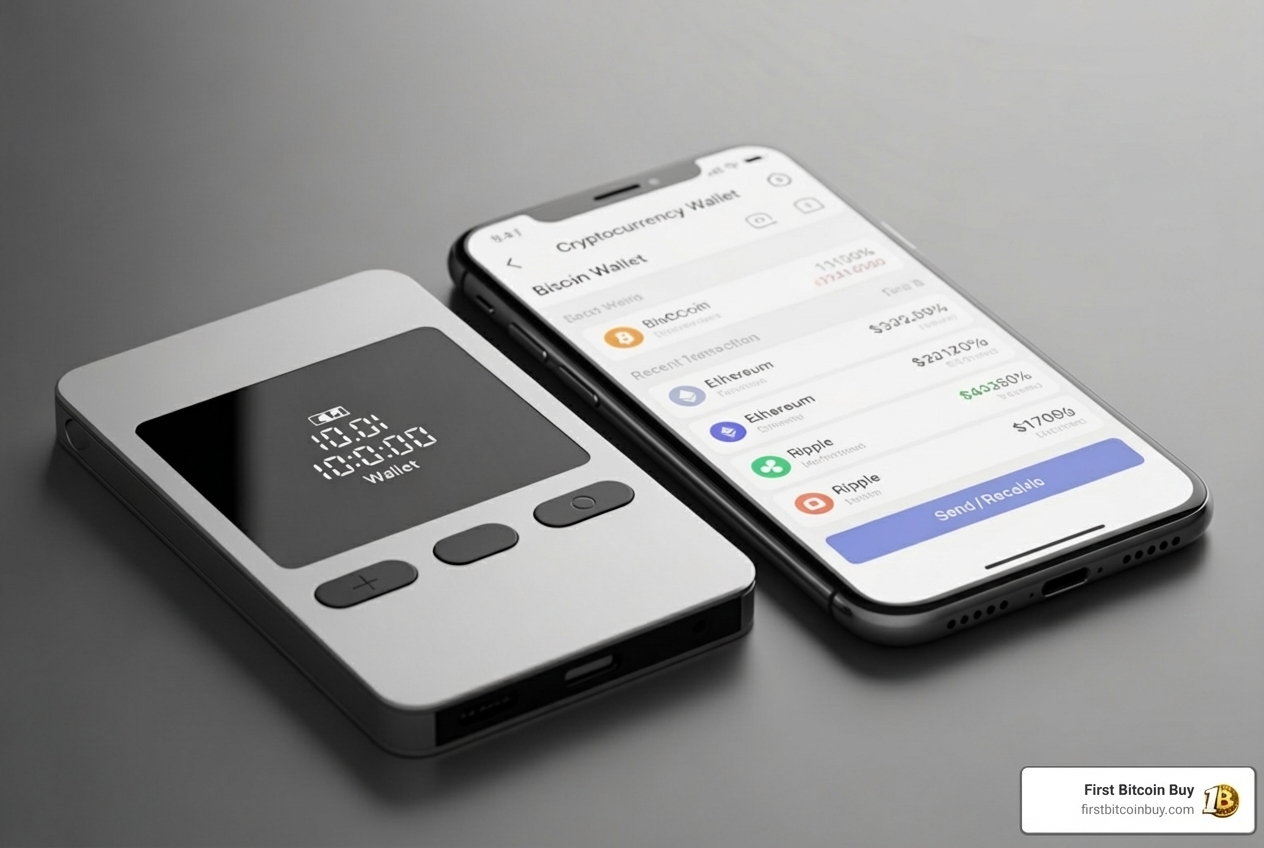
We highly recommend withdrawing your assets from the platform to a personal wallet you control. This is the essence of self-custody. When your crypto is on a platform, you don’t truly own the keys; the platform does. Moving it to your own wallet removes this counterparty risk, protecting you from platform failures like the FTX collapse.
For more information, refer to insights from FINRA: Storing Crypto Assets.
Hot Wallets vs. Cold Wallets: What’s the Difference?
Wallets don’t store your crypto; they store the private keys that prove your ownership. The type you choose greatly impacts your security.
-
Hot Wallets: These are crypto wallets connected to the internet (software, mobile, or web wallets).
- Pros: Convenient for frequent transactions, easy to set up, often free.
- Cons: More vulnerable to cyberattacks, malware, and phishing scams.
- Use for: Small amounts of crypto you plan to use or trade frequently.
-
Cold Wallets: These wallets are not connected to the internet, making them far more secure.
- Pros: Superior security for long-term storage (“HODLing”), immune to online hacking.
- Cons: Less convenient, cost money, and risk physical loss or damage.
- Use for: Large amounts of crypto you intend to hold long-term.
Here’s a quick comparison:
| Wallet Type | Internet Connection | Security Level | Convenience Level | Cost (Typical) |
|---|---|---|---|---|
| Hot Wallet | Yes | Lower | Higher | Free |
| Cold Wallet | No | Higher | Lower | $49 – $220 |
Hardware Wallets are the most popular type of cold wallet. They are physical devices that store your private keys offline. Transactions are confirmed on the device itself, keeping keys safe. Paper wallets are an outdated and insecure form of cold storage that we do not recommend.
How to Securely Store Private Keys and Seed Phrases
This is the ultimate security measure when you safely buy crypto. Your seed phrase (or recovery phrase) is a sequence of 12 or 24 words that can restore your wallet if you lose the device.
- Never Store Digitally: This is paramount. Do not screenshot your seed phrase, save it in a text file, email it, or store it in any cloud service. If a hacker gets access, your crypto is gone.
- Write It Down: The safest method is to write your seed phrase on paper (or multiple copies) in the correct order.
- Secure Physical Storage: Store these physical copies in secure, private locations like a fireproof bag, a home safe, or a bank safe deposit box.
- Dangers of Loss: We cannot stress this enough: If you lose your private keys or seed phrase, you’ve lost your cryptocurrency. There is no “forgot password” option.
Avoiding these mistakes is critical. Learn more at Common mistakes for Bitcoin beginners.
Fortifying Your Defenses: Advanced Security Measures
Beyond securing your crypto, protecting your broader digital life is essential to safely buy crypto and keep it secure.
Digital Identity Protection
Think of your digital identity as a fortress. Every account you create is a potential vulnerability.
- Social Media Privacy: Avoid flaunting your crypto holdings on social media. Bragging about investments makes you a target.
- Avoiding Public Wi-Fi: Never conduct crypto transactions or access financial accounts on insecure public Wi-Fi networks.
- Review Your Online Presence: Regularly assess your digital footprint. Minimize how much personal information is publicly available. You can start with a self-assessment: Review your online presence with this easy self-assessment.
How to Protect Yourself from Account Takeovers and SIM-Swap Attacks
Account takeovers and SIM-swap attacks are common tactics used to steal crypto. A multi-layered defense is required:
- Strong, Unique Passwords: This is your first line of defense. Use long, complex passwords that are unique for every single account. A reputable password manager makes this easy: Use a password manager.
-
Two-Factor Authentication (2FA): Always enable 2FA. Not all 2FA is equal.
- Hardware Security Keys: The strongest form of 2FA. A physical device like a Use a hardware security key is virtually immune to phishing.
- Authenticator Apps: Apps like Google Authenticator are much more secure than SMS-based 2FA.
- SMS-based 2FA: This is the weakest form and is vulnerable to SIM-swap attacks.
-
SIM-Swap Attacks Explained: A fraudster convinces your mobile carrier to transfer your phone number to a SIM card they control. They can then intercept SMS 2FA codes to access your accounts.
- Port-Out Protection: Contact your mobile carrier and add a “port-out protection” PIN to your account. This requires a unique PIN before your number can be transferred.
For more specific guidance, refer to our Coinbase Signup Security.
What to Do if Your Account is Compromised
If you suspect a breach, act immediately:
- Lock Your Account: Most platforms have a feature to instantly lock your account. Use it immediately.
- Contact Platform Support: Reach out to the customer support of the affected platform.
- Report Fraud: File a report with the authorities. For general fraud, use Report fraud to the FTC. Also, notify the crypto exchange you used.
- Change All Related Passwords: Change passwords for your crypto accounts, email, and other sensitive services.
- Scan Devices for Malware: Run a thorough scan on your computer and mobile devices with antivirus software.
Conclusion: Your Journey to Safe Crypto Ownership
Starting on the journey to safely buy crypto is an exciting venture. You are now equipped with the fundamental knowledge to steer this space securely. We’ve covered understanding crypto’s risks, avoiding scams, and mastering the art of securing your assets.
Remember these key principles: choose a reputable platform, understand the difference between self-custody and third-party custody, and prioritize the secure storage of your private keys. Your vigilance is your best defense.
Security in the crypto world isn’t a one-time setup; it’s a continuous process of learning and staying informed.
At First Bitcoin Buy, our mission is to empower beginners like you to safely buy crypto by providing clear, actionable guidance. We believe that with the right knowledge, anyone can confidently enter the crypto market.
Ready to take the next step? Our comprehensive guide is here to help.