
Why Understanding Bitcoin Basics Matters in 2026
Bitcoin basics explained in simple terms: Bitcoin is a form of digital money that lets you send and receive payments directly with other people over the internet, without needing a bank or payment company in the middle. It was created in 2009 by an unknown person (or group) using the name Satoshi Nakamoto. Bitcoin runs on a technology called blockchain—a public record book that everyone can see but no one can change. You can buy a fraction of a Bitcoin (you don’t need to buy a whole one), store it in a digital wallet, and use it to pay for things or hold it as an investment.
Quick Bitcoin Overview:
- What it is: Digital currency that works peer-to-peer
- Who controls it: No one—it’s decentralized across thousands of computers
- How many exist: Maximum 21 million Bitcoin will ever be created
- Smallest unit: 1 satoshi = 0.00000001 Bitcoin
- How to get it: Buy on an exchange, accept as payment, or mine it
- Key technology: Blockchain (a transparent, unchangeable ledger)
- Main uses: Store of value, sending money, investment
If you’re reading this, you’re probably curious about Bitcoin but worried about making costly mistakes. Maybe you’ve heard stories about scams, lost passwords, or people buying at the wrong time. That’s completely normal.
The truth is, Bitcoin isn’t as complicated as it seems. Yes, there’s new vocabulary to learn. Yes, the technology sounds intimidating. But at its core, Bitcoin is just a new form of money designed for the internet age.
This guide strips away the jargon and explains everything you need to know before buying your first Bitcoin. We’ll cover what Bitcoin actually is, how it works, where it came from, and most importantly—how to get started safely without falling for common traps.
Unlike traditional currencies controlled by governments and banks, Bitcoin operates on a decentralized network maintained by thousands of computers worldwide. This means no single entity can print more Bitcoin, freeze your account, or control the network. There will only ever be 21 million Bitcoin, making it potentially more scarce than gold.
Whether you’re looking to make your first $20 purchase or simply want to understand what all the buzz is about, this guide will walk you through everything step by step. No confusing technical details. No assumptions about what you already know. Just clear, actionable information to help you make informed decisions.
I’m Randy Speckman, and I’ve spent years helping people steer the cryptocurrency world safely through technology and measured strategies. My purpose-driven mission is to make bitcoin basics explained accessible to everyone, especially those taking their first cautious steps into this new financial landscape.
What is Bitcoin? The Digital Gold Rush Explained
At its heart, Bitcoin is a cryptocurrency—a digital or virtual money that uses cryptography for security, making it incredibly difficult to counterfeit. Think of it as “digital gold,” a comparison often made because, like gold, it’s scarce and can serve as a store of value. But unlike gold, you can’t hold it in your hand; it exists purely on the internet, secured by powerful technology.
Bitcoin was designed to be a peer-to-peer electronic cash system, allowing transactions to occur directly between users without the need for traditional intermediaries like banks or credit card companies. This groundbreaking idea was introduced during a period of significant global financial turmoil, making its appeal for an alternative financial system even stronger.
For more in-depth information about this fascinating digital asset, visit our guide: More info about What is Bitcoin?.
The Mysterious Origins of Bitcoin
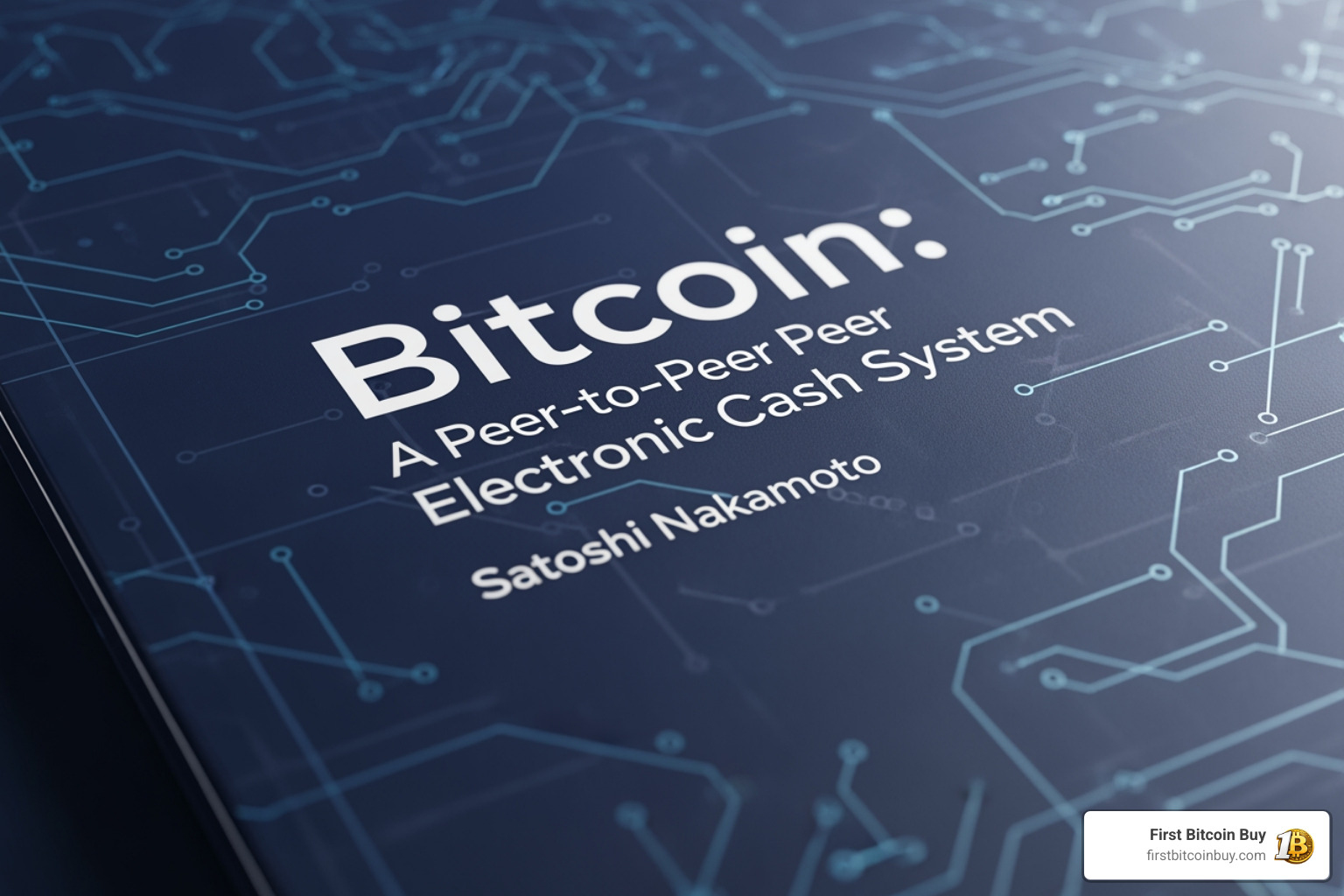
The story of Bitcoin begins with a mystery. In October 2008, amidst the global financial crisis, an anonymous individual or group operating under the pseudonym Satoshi Nakamoto published a white paper titled “Bitcoin: A Peer-to-Peer Electronic Cash System“. This document laid out the blueprint for a digital currency.
Then, on January 3, 2009, the first Bitcoin block, famously known as the “genesis block,” was mined. This block contained a hidden message: “The Times 03/Jan/2009 Chancellor on brink of second bailout for banks.” This message served as both a timestamp and a subtle nod to the very issues Bitcoin aimed to address—the instability and centralized control of traditional banking systems.
Satoshi Nakamoto remained involved in Bitcoin’s development until late 2010 before disappearing, leaving behind a decentralized network that has since grown into a global phenomenon. Bitcoin’s creation was a direct response to dissatisfaction with the traditional banking system, addressing concerns like privacy, high transaction fees, and government-induced inflation.
Bitcoin vs. Traditional Currencies
To truly grasp the bitcoin basics explained, it’s helpful to compare it with the money we use every day—fiat currency (like the U.S. dollar). The differences are fundamental and explain why Bitcoin is so revolutionary.
| Feature | Bitcoin | Fiat Currency (e.g., USD) |
|---|---|---|
| Control | Decentralized (no single entity) | Centralized (government, central banks) |
| Supply | Fixed (max 21 million Bitcoin) | Unlimited (can be printed by central banks) |
| Inflation | Deflationary by design (halving events) | Susceptible to inflation |
| Transactions | Peer-to-peer, borderless, immutable | Intermediary-reliant, national borders |
| Transparency | Public ledger (blockchain) | Often opaque (bank records are private) |
| Value | Market-driven, scarcity, adoption | Government decree, economic stability |
Unlike traditional currencies, Bitcoin is not owned or controlled by any government or central bank. Its value is not anchored to physical goods or the economy of a specific country. Instead, it operates on a decentralized network of over 10,000 machines (called nodes) around the world, making it incredibly resilient and difficult to shut down. This decentralized nature is a core principle of Bitcoin, ensuring that no single entity can manipulate its supply or censor transactions. The capped supply of 21 million coins, a feature encoded into its very design, makes it a potential hedge against inflation, a stark contrast to government-issued currencies that can be devalued by printing more money.
The Core of Crypto: Bitcoin Basics Explained
Understanding how Bitcoin works requires a peek under the hood at its foundational technology: the blockchain. This innovation is what allows Bitcoin to operate without a central authority, maintaining security and trust across its global network.
The Blockchain: Bitcoin’s digital ledger basics explained
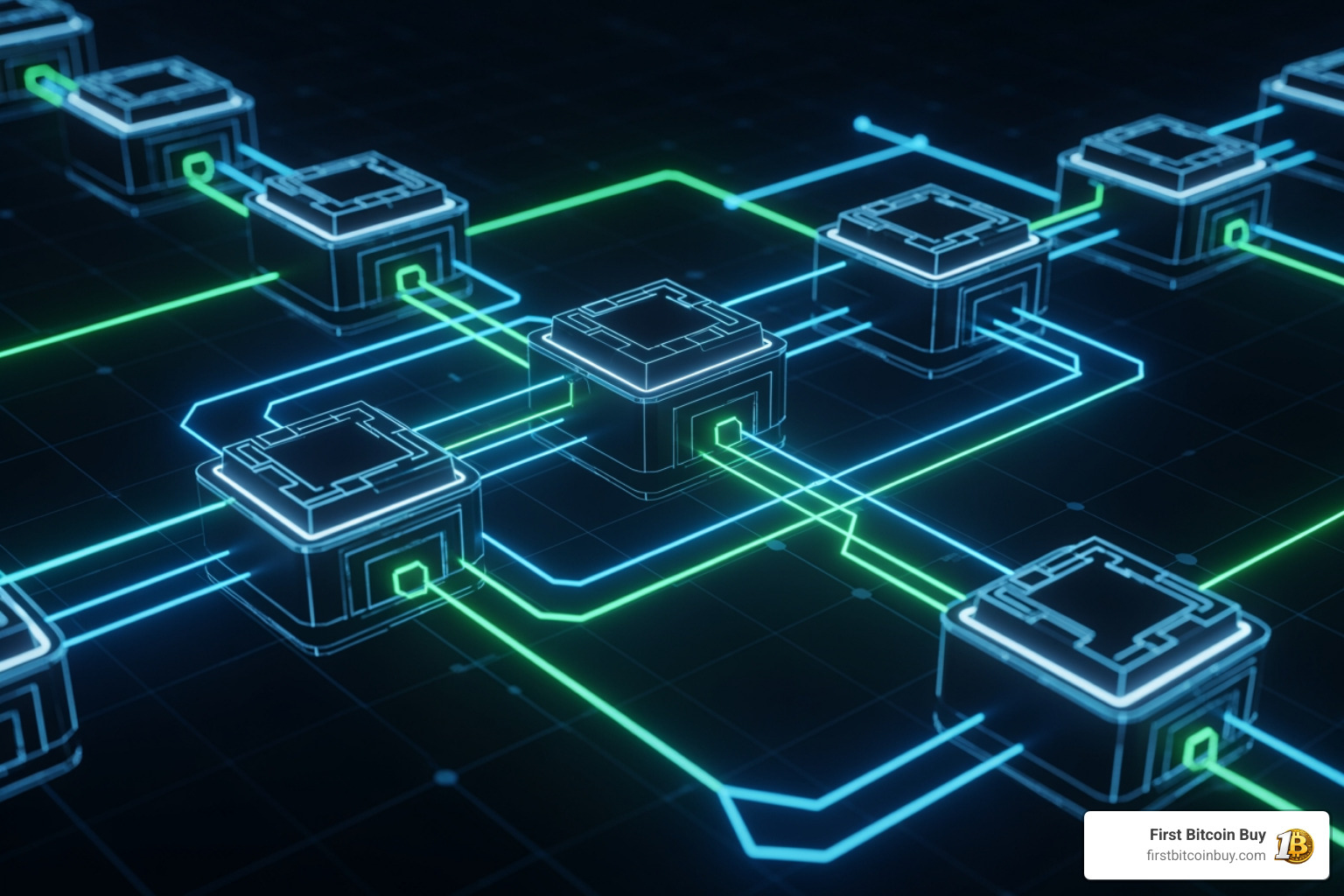
Imagine a digital ledger—a public record book—that records every single Bitcoin transaction. Now, imagine this ledger isn’t stored in one place, but is distributed across thousands of computers worldwide. This is the blockchain. Every transaction is added to this shared ledger, making it open, public, and practically impossible to censor.
Each “block” in the blockchain contains a list of transactions. Once a block is filled and verified, it’s added to the “chain” of previous blocks, creating a continuous, chronological, and tamper-proof record. This process relies on cryptographic techniques to link blocks together, ensuring that once a transaction is recorded, it cannot be altered or removed. This immutability is a cornerstone of Bitcoin’s security and trustworthiness.
The “nodes” (the computers running the Bitcoin software) constantly verify and maintain this ledger, allowing different computers to agree on the system’s state. This transparency means anyone can inspect the blockchain, yet no single person controls it. It’s like a continually updated book that everyone can read but no single entity can rewrite.
What is Bitcoin Mining? The process explained
If the blockchain is the ledger, then Bitcoin mining is the process that keeps it running securely and adds new transactions. Bitcoin mining is a distributed consensus system used to confirm pending transactions by including them in the blockchain. It’s how new blocks are created and how the network enforces chronological order.
Miners use powerful, specialized computers called Application-Specific Integrated Circuits (ASICs) to solve complex cryptographic puzzles. The first miner to solve the puzzle for a new block gets to add that block to the blockchain and is rewarded with newly minted Bitcoin and transaction fees. This process is known as “Proof-of-Work.”
The rewards for mining don’t stay constant. Bitcoin mining rewards started at 50 BTC in 2009. However, the Bitcoin network halves the reward miners earn for adding a block approximately every four years—a process called “halving.” By April 2024, that reward dropped to 3.125 bitcoins per block. This programmed scarcity helps control Bitcoin’s supply and makes it more like digital gold.
Mining protects network neutrality and prevents manipulation of the blockchain. The strict cryptographic rules and the competitive nature of mining make it incredibly difficult for any single entity to control block additions or alter past transactions. While Bitcoin mining consumes a significant amount of energy, it’s a vital process that secures the entire network.
Key Concepts: Wallets, Keys, and Decentralization
Navigating Bitcoin involves understanding a few key concepts that are fundamental to its operation and your interaction with it:
- Cryptocurrency Wallet: This is your digital pouch for safely storing your Bitcoin, similar to a virtual bank account. However, unlike a bank account, you (and only you) are in control of your funds. Wallets don’t actually “hold” Bitcoin; instead, they store the cryptographic information needed to access and manage your Bitcoin on the blockchain.
- Public Key: Think of this as your Bitcoin address—like an email address or a bank account number. It’s what you share with others when you want to receive Bitcoin. Anyone can see your public key, but they can’t access your funds with it alone.
- Private Key: This is your secret password, the key to open uping and spending your Bitcoin. It’s a string of characters that proves you own the Bitcoin associated with your public key. Keeping your private key secret and secure is paramount; if you lose it, your Bitcoin is gone forever. If someone else gets it, they can steal your Bitcoin.
- Seed Phrase (Recovery Phrase): Often a list of 12 or 24 words, this phrase is a human-readable form of your private key. It’s used to recover your wallet if it’s lost or damaged. This is perhaps the most important piece of information to protect, as anyone with your seed phrase can access your funds.
- Decentralization: This is the core principle that sets Bitcoin apart. It means that control is distributed across the entire network rather than relying on a single central authority. There’s no “single point of failure”—no one company or government can shut Bitcoin down or control its rules. It’s like having a group decision instead of one boss calling the shots, making the network more robust and censorship-resistant.
Understanding these concepts is crucial for secure and confident participation in the Bitcoin ecosystem.
How to Get and Use Your First Bitcoin
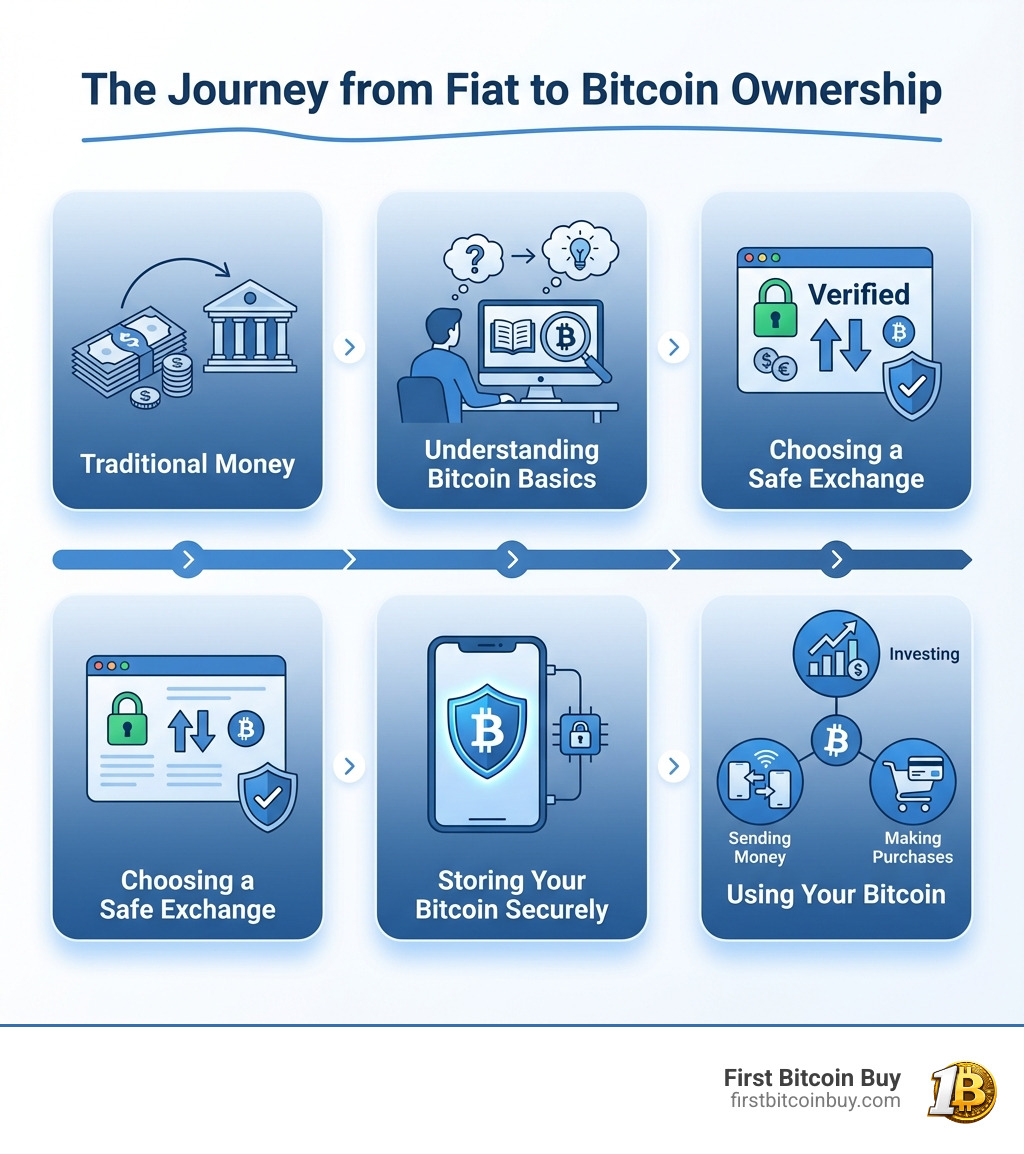
Now that we’ve covered the bitcoin basics explained and how it all works, let’s get to the exciting part: how you can acquire your first Bitcoin and what you can do with it.
How to Acquire Your First Bitcoin
There are a few primary ways to get your hands on Bitcoin, but for most beginners in the U.S., buying it through a cryptocurrency exchange is the simplest and safest route.
Here are the main ways to acquire Bitcoin:
- Buy it on a Cryptocurrency Exchange: This is the most common method. You can create an account on a reputable exchange (like Coinbase, which we often recommend for beginners due to its user-friendly interface and strong security measures). You’ll link your bank account, credit card, or debit card to fund your account with U.S. dollars, and then you can purchase Bitcoin directly. You don’t need to buy a whole Bitcoin; you can buy fractions of it, even just $20 worth.
- Earn it as Payment: If you’re a freelancer or a business owner, you can accept Bitcoin as payment for goods and services. A growing number of services and merchants worldwide accept Bitcoin.
- Mine it: As we discussed, Bitcoin mining involves using specialized hardware to solve complex puzzles and verify transactions. While it was once possible to mine Bitcoin with a home computer, today it requires significant investment in ASICs, high electricity costs, and technical know-how. For most individuals, buying Bitcoin is far more practical than mining it.
For a detailed walkthrough on setting up your first account and making your initial purchase, check out our Coinbase Beginner Guide.
What Can You Do With Bitcoin?
So, you’ve got some Bitcoin. Now what? Bitcoin has evolved beyond its initial purpose as a simple peer-to-peer electronic cash system to become a multifaceted digital asset with several key uses:
- Store of Value: Many people view Bitcoin as “digital gold” due to its finite supply (only 21 million will ever exist). They hold it with the expectation that its value will appreciate over time, making it a hedge against inflation.
- Medium of Exchange: While still in its early stages compared to traditional currencies, a growing number of merchants and services globally accept Bitcoin for payments. You can use it to buy goods, pay for services, and even book travel.
- International Transfers: Bitcoin enables fast and relatively inexpensive international money transfers, bypassing traditional banking systems that can be slow and costly. You can send value across borders without intermediaries, often with lower fees than wire transfers.
- Investment and Speculation: Bitcoin’s price has seen significant appreciation over the years, attracting investors and speculators. For instance, Bitcoin’s price climbed to more than $50,000 by mid-February 2024, highlighting its potential for growth, but also its volatility.
- Experimentation with New Technologies: For tech enthusiasts, Bitcoin is a gateway into the broader world of crypto, blockchain, and Web3, offering opportunities to experiment with new decentralized applications and financial systems.
Ready to take the plunge? Our guide will walk you through the first steps: Start Buying Bitcoin.
The Investor’s View: Pros, Cons, and Risks
As with any financial asset, understanding Bitcoin from an investor’s perspective involves weighing its potential benefits against its inherent risks. It’s a wild ride, but with the right information, you can steer it smartly. Before diving in, it’s always wise to learn from others’ experiences and avoid common pitfalls. Check out our insights on More info on common mistakes to help you on your journey.
The Pros and Cons of Bitcoin
Here’s a balanced look at the ups and downs of using or investing in Bitcoin:
Pros:
- User Autonomy: Bitcoin allows you to “be your own bank.” You have full control over your funds, free from intermediaries and government oversight.
- Scarcity: With a hard cap of 21 million coins, Bitcoin is inherently scarce. This limited supply is often seen as a hedge against inflation, making it analogous to digital gold.
- Low Transaction Fees (for large transfers): For significant international transfers, Bitcoin can be cheaper and faster than traditional banking methods.
- Accessibility: Bitcoin is accessible to anyone with an internet connection, including the over two billion unbanked individuals globally, offering financial services without traditional barriers.
- Decentralization & Security: The decentralized network and cryptographic security make Bitcoin highly resistant to censorship and fraud.
Cons:
- Price Volatility: Bitcoin’s price is notoriously volatile. It has experienced dramatic swings, reaching a record high of over $69,000 in November 2021. This volatility makes it a high-risk investment.
- Security Risks for Users: While the network is secure, individual users are at risk from theft, crypto scams, and loss due to hacking, poor security practices (like losing private keys), or phishing attacks.
- Scalability Issues: The Bitcoin network has limitations on the number of transactions it can process per second, which can lead to slower transaction times and higher fees during periods of high demand.
- Regulatory Uncertainty: The regulatory landscape for cryptocurrencies in the U.S. is still evolving, creating uncertainty for businesses and investors.
Understanding the Risks
Investing in Bitcoin carries significant risks that every potential buyer should be aware of:
- Market Risk: Bitcoin’s price is highly speculative and influenced by a multitude of factors, including news events, regulatory changes, and broader economic trends. Its value can fluctuate wildly, leading to substantial gains or losses.
- Security Threats: Cryptocurrency exchanges and individual wallets are targets for hackers and scammers. While Bitcoin’s underlying technology is robust, your personal security practices are crucial. Malware, phishing scams, and social engineering can lead to stolen funds.
- Lack of Insurance: Unlike traditional bank accounts, Bitcoin holdings on most exchanges are not insured by government-backed schemes like FDIC or SIPC in the U.S. While some exchanges offer private insurance for certain types of losses, this is not universal.
- Irreversible Transactions: Once a Bitcoin transaction is sent and confirmed, it’s irreversible. If you send Bitcoin to the wrong address or fall victim to a scam, there’s no central authority to reverse the transaction.
- Regulatory Risk: The U.S. administration is actively working to impose regulations on cryptocurrency. While these efforts aim to provide clarity and protection, they could also impact Bitcoin’s accessibility or use cases.
Given these risks, ask: Is Bitcoin Safe? Our answer is always: it’s as safe as you make it, by understanding the risks and implementing best practices.
What are Bitcoin ETFs?
For those interested in gaining exposure to Bitcoin without the complexities of direct ownership, security concerns of managing private keys, or navigating crypto exchanges, Bitcoin Exchange-Traded Funds (ETFs) have emerged as a significant development, particularly in the U.S.
A Bitcoin ETF is an investment fund that tracks the price of Bitcoin and can be bought and sold on traditional stock exchanges, just like shares of a company. It offers a simpler, more regulated way for investors to gain exposure to Bitcoin.
- Spot Bitcoin ETFs: These funds directly hold actual Bitcoin. Their goal is to closely track the real-time price of Bitcoin.
- Bitcoin Futures ETFs: These funds don’t hold Bitcoin directly but instead invest in Bitcoin futures contracts, which are agreements to buy or sell Bitcoin at a predetermined price on a specific future date. They allow investors to speculate on Bitcoin’s future price movements.
Both types of ETFs are regulated financial products. For U.S. investors, the approval of Bitcoin Spot ETFs in early 2024 was a landmark event, indicating increasing acceptance of cryptocurrency in traditional finance.
A key benefit of Bitcoin ETFs is their potential inclusion in Individual Retirement Accounts (IRAs). Investing in a Bitcoin ETF within a Traditional IRA offers tax-deferred growth, meaning you pay taxes only when you withdraw funds in retirement. Alternatively, a Roth IRA allows for tax-free growth and qualified withdrawals in retirement, as contributions are made with after-tax money. This provides a more regulated and tax-efficient environment for Bitcoin investment compared to holding Bitcoin directly on many crypto exchanges.
Conclusion
You’ve made it! From understanding “digital gold” to navigating the intricacies of blockchain, mining, and secure storage, you’re no longer at “zero” when it comes to bitcoin basics explained. We’ve demystified the key concepts, explored its fascinating origins, contrasted it with traditional money, and outlined how you can safely acquire and use this digital asset.
Our mission at First Bitcoin Buy is to empower you with knowledge and confidence. We believe that understanding Bitcoin doesn’t have to be overwhelming. By focusing on security first and taking measured steps, you can confidently start on your crypto journey.
The world of Bitcoin is dynamic and changing, but with the foundational knowledge you’ve gained here, you’re well-equipped to make informed decisions. We’re here to guide you every step of the way, ensuring your first Bitcoin purchase is safe, secure, and successful.
Your crypto journey is just beginning, and we’re thrilled to be your trusted resource. For continued learning and to deepen your understanding, explore our comprehensive: Continue learning with our Bitcoin Beginner Guide.